






The Blueprint: The Gloves Pt. 2 - #007
BOXRAW Founder and CEO, Ben Amanna, on everything that happened between the first glove blog and the Strike range launching on 22nd October 2026.
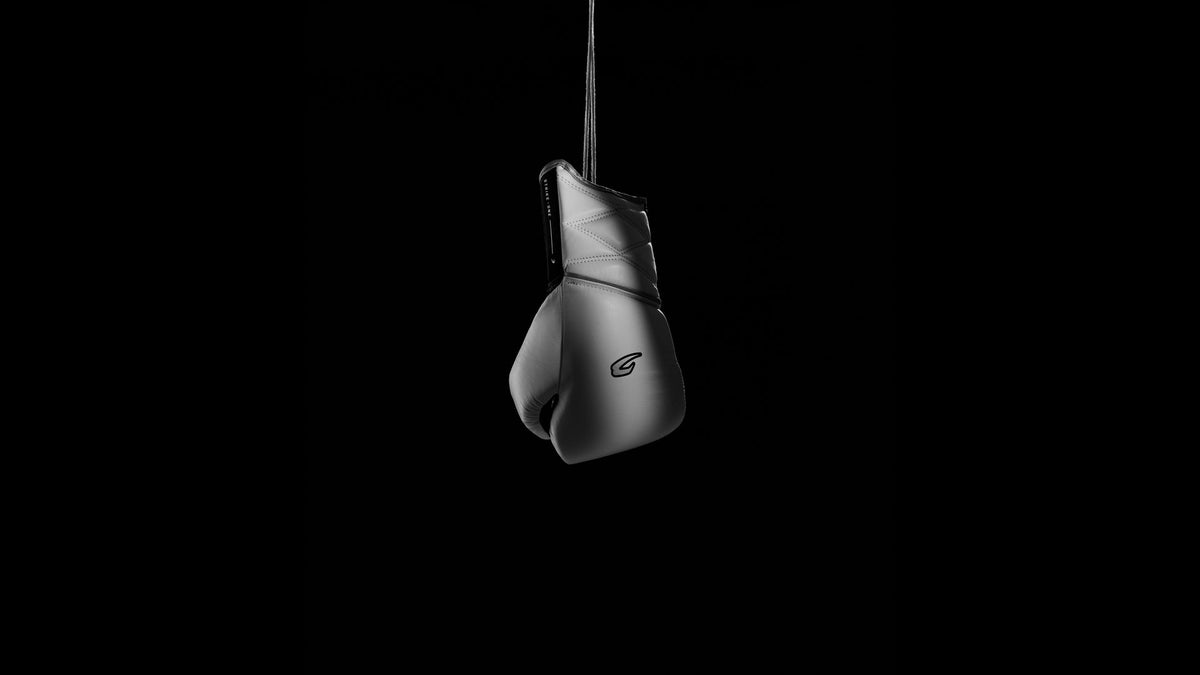
Where Are the Gloves?
In March 2023 I wrote that the gloves still weren’t complete. Six years in at that point, I ended that post promising they would be the best boxing gloves in the world and the greatest innovation the sport had seen.
Then I went quiet for three and a half years.
I know how that looked. From then on, every post we put out, someone would ask where the gloves are and my DMs were filled almost daily with speculation around the gloves. Some people thought the delays were manufactured hype - a story we kept telling to keep people waiting.
It wasn’t. The reason it took this long is that making one great glove is hard, but making thousands of them where the left is identical to the right is a completely different problem, and that’s the part I couldn’t have written about in Pt. 1 because I was still in the middle of it.
Where It Started
Pt. 1 covered my hands. Arthritis in the wrists and knuckles at 21. Ten minutes getting wrapped before I could hit a bag. Struggling to turn a car key the next day.
I’d been thinking about making a glove since we launched BOXRAW in 2017, but it was always on the back burner behind the apparel. The thing that properly got me started was a trip to Liberia in 2018 with Boxing Is Love. I needed gloves for the kids, so my hand wrap supplier sent some options and I picked the best of a bad bunch. When we got home and posted the photos, people hounded us to sell them. I thought they looked like trash and there was no way I could train in them with my wrists, so I started the work.

I could only ever wear lace ups, because laces let you tighten specific points across the wrist and forearm. The problem was I needed someone to tie them. If I was on my own on the bags, I was in a velcro glove getting half the support. The first brief was simple. Lace up support, velcro convenience.
I had a crazy stupid idea. A long cuff with 4 adjustable nylon straps and a zip, so you’d set the straps once and after that all you had to do was pull the zip. I sent the design to a supplier in China and booked a flight the following month.

It didn’t work. The cuff nearly reached my elbow. The foam was too thick to feel the straps. The zip was impossible to grab with a glove on the other hand.
At the time we were working with Vasyl Lomachenko and I was acting as his commercial manager. Loma had suffered hand injuries throughout his career so I picked his and his father’s brains at every opportunity. His father pointed out (which is incredibly obvious now) that pulling three straps with a glove thumb was going to be a nightmare. Loma loved the idea of a velcro that tightened in multiple places so we kept the idea, killed the execution but found another way.

That became the Twin Strap. One small strap you adjust once for the top of your wrist, then one big strap you pull and the glove tightens in two places at the same time.

Learning How a Glove Is Actually Made
For the first year I worked with the factory the way I’d always worked with suppliers. I’d tell them what I wanted, they’d make a sample and send it over. The problem was that this particular factory took 2 to 5 months between each sample, and every time one came back it wasn’t what I’d asked for. They’d been making gloves the same way for over a decade and they were bound by that experience, so anything that didn’t fit the way they already did things just got lost.
So, I bought every major glove on the market and took them apart. I looked at the foam, drew out the patterns and tried to understand the thinking behind each one, and then I drew my own pattern and started working from that. I was travelling a lot at the time and wherever I went, the latest sample and a set of patterns came with me so I could keep working on it in the evenings.

Covid slowed everything further. When we came out of lockdown, I hired Ela. A fashion student taking a year out working for Vogue. She’d never boxed or watched boxing in her life, but she was the best pattern maker on her course, could run a sewing machine, and matched my energy. For the first time I had someone sat next to me who could make what I was drawing, and that changed the speed of everything.
We couldn’t afford leather, so we made gloves out of calico, the cheap woven fabric pattern makers use. Instead of waiting 2 months for a sample from China, we were making 2 or 3 a day in our office, often till 2, 3, 4am, and every change was documented.
By this point I’d spent a year speaking to physios, coaches, anthropologists and universities about what actually happens to the hand when a punch lands. I wanted to understand where pressure helped a punch, where it caused injury, and how a glove could move the impact away from the parts of the hand that weren’t built to take it.
A few things kept coming up. The first was the hand bar. Most gloves have a thin strip of foam in the palm that does very little. What the research pointed to was something you could actually grip, sized and positioned around how the fist closes and takes impact, so that more of the force goes through the bar and into the arm rather than straight through the metacarpals. Finding the right size, shape and position for that bar became a mission in itself.
The second was the wrist. Overhand shots and thumb-down hooks were where my wrist gave way, and the boxers I was testing with said the same. We tried a lot of things to stop the wrist overextending, and what eventually worked was lengthening the cuff on one side and running a bar of denser foam along it so that once the glove was tight, the bar sat firmly against the forearm and held it. Today that’s the Curved Cuff and the Side Bar, and it’s the most recognisable thing about the glove.
The third came from Silverstone, where we’d been running the gloves through computational fluid dynamic testing to understand the drag. The scans showed the gap between the thumb and the fist was costing us, so we started working on closing it. I’ll come back to that one, because there were bigger problems to solve first and aerodynamics is still an area I know we can push further.

Meanwhile we’d been developing foams in Japan for over a year and we finally found a nitrile based, closed cell compound that was incredible. It was light, the rebound was perfect and in my own testing I could hit a brick wall in it without wraps and not feel a thing on my knuckles. We ordered a huge amount of it before we properly understood how it behaved over time, and when it arrived and had sat for a while we found the foams had dented and lost their shape through shrinkage. We’d spent a lot of money on that foam and we had to write it off at a time when cash was incredibly tight. It put us straight back on the search for a new one while also meaning less budget was available for more developments. It was an expensive way to learn what open cell and closed cell actually mean.
Coventry
In 2021 news broke that Creed III was filming. Michael B Jordan had worn BOXRAW in Creed II, and after months of chasing I got a call with him. Thirty minutes turned into ninety, he bought into the vision and agreed he’d wear the gloves throughout the movie.
I got off the call and phoned Ela. We had less than 3 months and China couldn’t do it in that time.
There were no glove manufacturers in England, so I went looking for the closest thing I could find. A company in Coventry made the interior trims for Bentley, and while they’d never made a glove, they worked with leather and foam to tolerances that were far tighter than anything I’d seen in a glove factory. We opened a small office inside their factory and moved in. There were nights I slept there, and we delivered the gloves on 23 December, the day before they closed for Christmas.
While we were working in that factory we developed the Fast Closure Lacing System. Lace up gloves are slow to close properly, waiting for your coach to pull each lace through one at a time. I wanted a lace up you could tighten in one pull, so we built a system that does exactly that, and then I added a pattern on the opposite side of the glove that guides whoever is tying them to build the pressure from the bottom of the cuff up. That matters more than it sounds, because if the laces aren’t tied in that order the Side Bar doesn’t sit against the forearm and you lose the whole point of it.

It wasn’t all good. We’d become so obsessed with aerodynamics that I kept pushing the gloves slimmer and slimmer, and in the end the ivory pair we made for the film were so tight he couldn’t get his hands into them. Only the red gloves made it on screen – the ivory ones never. I’d over-indexed on one thing I cared about and forgotten the simplest thing, which was that the gloves needed to look good on camera and fit the man wearing them. That one took me a while to get over.

Around the same time things with the first factory started to unravel. They’d underestimated how long the development would take, and because their seamstresses were on the clock, every mistake they made ended up on our invoice. We weren’t in a position to keep paying what they were now asking, so we moved into another factory in Coventry, this one responsible for the interior trims at McLaren Automotive. It went the same way. The glove had so many features that if any one of them was slightly off spec, the others stopped working, and that level of precision was asking a lot of people who hadn’t lived inside the glove for years.
What 2 serious factories taught us was that the value isn’t in being a line item on someone else’s day sheet but instead, it’s in sitting next to the person who’s actually sewing the glove.
Karen
Hiring took a long time but we brought it in house. Everyone we met could sew, or run a factory floor, or work with leather. Nobody could do all three and nobody knew what we were trying to build.
Karen could. 61 years old and 15 years running her own workshop doing interior trims for yachts. Six sons roughly my age, a past life as a raver and DJ, she understood us and our culture. Late nights in the office she’d put house music on and we’d work through to the early hours. She believed in what we were doing and she worked like the company was hers.


In her almost year with us she absorbed everything. Not just the patterns, but the order things get done in. The way a glove goes together rather than just gets assembled. The kind of knowledge that doesn’t sit on a shared drive.
On Friday 12th May 2023 we solved a problem that had been bugging us for months, around the thumb and the pressure it put on the hand. We celebrated.
That Sunday, 14th May, Karen sadly passed away at home from a cardiac arrest.
It broke me. I’d never dealt with a death on the team before and I don’t think anything prepares you for it. For a while the glove was the last thing on my mind. Karen had been sat next to me and Ela every day for the best part of a year, and the office felt wrong without her music on. It took me a month or so before I could even think about what came next.
Pakistan
Once we picked ourselves back up, we hired Asif. 30 years in leather garments, had owned his own factory and came from aviation and private jet interiors. In his interview he sat down at the machine and told me it was broken. I assured him it wasn’t as we’d been using it for a year without issue. He got on his knees, took the machine apart and showed me the problem, and when he put it back together it sounded completely different. I knew right then he was the guy.
Asif got the glove to a place where everything worked. Hand bar, side bar, thumb, fist, laces, cuff. We had the glove I wanted.
However, it took 22 - 26 hours to make a pair.
We’d have had to price it over $800 USD to make anything back on UK labour. I grew up in an amateur gym in Coventry so I know exactly the socio demographic group boxing attracts and I know what they could afford. A glove at that price goes against the entire reason I started this.
Asif was originally from Pakistan and he happened to be going there to visit family. I asked him to visit some factories while he was out there and assess the market. He audited around 10 factories and came back with one he trusted. In January 2024 I flew out for the first time.

I’ll be honest about Pakistan because I think we owe people that - it was never on the map. Pakistan had a reputation in gloves, it wasn’t elite and it’s not where I wanted ours to be positioned. But after exploring both China and England, I had to get these gloves out there and I couldn’t stand the idea of the glove being something unattainable financially for our customers. What I found when I got there were people who had spent their whole working lives making boxing gloves, which was more than I could say for anywhere else we’d tried.
Nothing moved over as it was. The leathers and foams we’d developed in England with third party suppliers had to be rebuilt from scratch with new partners locally, to our spec. With the factory itself we ran into a familiar problem. These guys had been making gloves the same way for decades, so we had to get down on the floor with them and teach them to make it our way. The difference from England was that here the knowledge of how to make a glove already existed, we just had to redirect it, and I had Asif with me who spoke the language and could get things done the way I wanted them done. I’ve made 9 trips out there since that first visit, usually 2 weeks at a time. Power cuts all day, then working till 2 or 3 in the morning to keep up with the UK BOXRAW office, BOXRAW Labs and Boxing Is Love from a hotel room. I never anticipated spending that much of my life out of the country for a glove.
The hardest part was cultural. In China, when something wasn’t working, we could argue about it. In Pakistan the answer was always yes sir. Yes it’s fixed. Yes it’s done. Then it wouldn’t be. We’d agree a change in the sample room and come back to find it hadn’t carried through to the production line, and the gap between the yes and the reality cost more time than anything else on this project.
Trying to nail the foams over there was tough. The quickest way I’ve ever found to test a foam is to hold it against a brick wall and punch it, harder each time. I know what a good foam feels like against a wall, which sounds strange, and I don’t recommend it, but it’s how I’ve always done it. One compound we were testing split my knuckle straight down the middle and I couldn’t punch properly for 2 months, which held up testing even further. The upside was the team watched me do it. They’d seen me on the bags with every sample they made, and I think that was the moment they understood this wasn’t another customer ordering a glove. It mattered to me, and after that it started to matter to them.

The other thing that kept coming back was the difference between the left and the right. The sample room would make a great pair, and then when you looked closely one glove would bend in a slightly different place to the other, or the thumb would sit differently. We’d fix it in the pattern and on the sample line, and then the same differences would reappear once it hit production. I knew the glove was ready when the left felt identical to the right, which sounds obvious, but put almost any pair on the market side by side and I can show you the differences.
One Glove Became Four
This is the part nobody knows, and it’s the real reason this took 8 years instead of 6.
Up to that first trip the glove wasn’t called the Strike-One. It was the Gurõbu - a name inspired by Japan given we were originally sourcing our materials there. In Pakistan I was able to bring the unit cost down a long way from what it was costing in England, but it was still a glove that took the best part of a day to make, and the price we’d need to sell it at to recoup our costs was still out of reach for the part of the boxing market I grew up in. Standing in the factory and watching the volume and variation of gloves going through for other brands, it didn’t sit right with me that I’d put years into a glove only some people could afford. So I changed the naming. The Gurõbu became the Strike-One, and underneath it I conceptualised the Strike-Three, Strike-Five and Strike-Seven, with the gaps left on purpose for versions that would come later.
I could have launched it as a premium glove and left it there, but I kept thinking about the kids at my old gym. I’d solved a problem I had growing up, and the solution was going to be out of their reach. It was never right to me that you could only own a BOXRAW glove if you had $400 USD to spend. The kids I grew up with couldn’t, and I couldn’t either. So I took the job of launching one glove and turned it into launching four, across lace and straps. That added roughly two years of development time.
- Strike-One - Raw Full Grain Leather, every feature. Lace $380 USD. Twin Strap $400 USD.
- Strike-Three - Same glove, same features, a high grade microfibre shell instead of leather. Lace $230 USD. Twin Strap $250 USD.
- Strike-Five - Same fist positioning and hand bar, top grain leather fist, PU palm, single strap. $130 USD.
- Strike-Seven - Our own injection moulded foam built around the Strike-One fist shape, PU throughout. $50 USD.
Every one of them was put next to everything else at its price. If it wasn’t better, we wouldn’t do it.
The Champions
8 people in boxing really helped shape this glove. Loma and his father. Terence Crawford, who spent an hour in the back of his G-Wagon in Omaha showing me how he wants his hand to sit when it’s tensed versus relaxed. Gervonta Davis, who gave invaluable feedback on various foams. Teddy Atlas, who loved the Side Bar but said it sat too far from the wrist. Oleksandr Usyk. Junto Nakatani. And Dmitry Bivol, who complained about the thumb more times than I can count, and whose feedback I owe more to than anyone’s.

None of them were paid to do this. The feedback was painful. You pour years into something and someone you respect tells you it’s wrong, or two of them tell you opposite things. Everything they said came from a logical and sincere place. Once I took my ego out of it, they were right every time.

The elite feedback always came back to the same thing. The fist. How the knuckles sit, where the thumb goes, how the hand closes. More important than any foam.
When Bivol and Junto both told me they were happy with the gloves and wanted to use them, after years of hearing no, that was the moment it felt real and I was ready.
Bulk
Then the real problem started, because what a team can make in a sample room is nothing like what comes off a production line. In a sample room one person owns the whole glove. On a line, 7 people share it. One ruche too many around the knuckle changes where the glove bends. On a sample line you fix it. On a bulk line one person’s mistake gets passed down and amplified, and you end up with thousands of gloves that are wrong in a way you can’t see until you put your hand in.
In December 2025 I flew out to approve bulk. I reviewed over a thousand pairs. Around 90% failed. Finger patches inconsistent. Thumbs sitting differently. And on nearly every pair the right glove was better than the left, because one side of the line was being sewn properly and the other wasn’t.
That one broke me more than anything else in this whole process. To get to that first bulk run there had been almost a year of training the factory and the workers, sample after sample, and a lot of cash injected to get there. I’d given my team my word that the gloves were finally in a good place and that we had sign off from the fighters, and now I was flying home to tell them we weren’t there yet.
In February I went back and reviewed another batch. Around 50% failed, which was better, but still nowhere near good enough. I went back again in May and this time the fail rate was around 30%. That was progress, but it still wasn’t good enough for a finished product. What it gave us was a way forward, as long as every single glove was inspected rather than relying on a sample from the batch, and on that basis I approved bulk production.


So every glove now gets inspected twice. Once in the factory, and a second time here in the office by me and the team. If it doesn’t meet the standard, it doesn’t go to a customer. After 3 failed bulks, we can’t not.
That’s also why we’re launching in October rather than September because the recent checks in the office failed a further 30%.

What You’re Actually Buying
Pt. 1 promised patent pending features and said I couldn’t talk about them yet. I can now.
Everything started with the position of the hand. How the fist closes, where the thumb sits and how to support the wrist, and then building the rest of the glove around that without adding weight where it isn’t needed. A 12oz glove has to weigh 12oz, so every gram you spend on leather is a gram you can’t spend on foam. Leather is heavy, and ventilating the palm and thumb takes 20% of the weight out of that panel, which we put straight back into denser, better foam around the knuckle. That’s the Vented Palm and Thumb. The Twin Strap, which is patented, came from needing the support I got from a lace up without needing someone else to tie it, and it gives you that in one pull. For those who prefer laces, the Fast Closure Lacing System does the same thing for a lace up. The patented Curved Cuff and Side Bar hold the wrist and forearm in position on the shots where overextension is prevalent. The Thumb Pocket holds the thumb where it’s safe, the Finger Ledge gives you something to grip, the patented Impact Bar takes the absorption and the Rubber Knuckle Pad sits over the knuckles.

The hand bar is the one people notice first when they make a fist. Most hand bars are a thin strip of foam that’s there because gloves have always had one. When I was a kid I remember lads in street fights holding a lighter in their fist to beef up their knuckles, and pros getting wrapped for a fight will ask for a hard bar across the palm so they’ve got something to grip onto. It’s the same idea, and we built it into the glove. Ours is a single piece, extended on the thumb side so it pushes the front two knuckles out a little further, and when you close your hand it feels like you’re grabbing hold of something. It’s designed so that more of the impact goes through the bar rather than straight through the metacarpals, which for someone with hands like mine makes a massive difference when wanting to punch harder.
As for my hands. I can train in these without being wrapped for ten minutes first. The Curved Cuff and Side Bar have taken the fear out of overhand shots. The Twin Strap gives me wrist support I used to need a coach for. And the Impact Bar coupled with the foam has been built for people like me, whose power outweighs what their hands can take. If you’ve ever held back on a heavy bag because you knew you’d pay for it the next day, these were made for you.
Not Finished
I’m not going to tell you these gloves are perfect. I’ve spent so long with them that I’m always going to see things I want to keep working on, and that’s how we got here in the first place. When I hand them to other people, they don’t see any of it. I’m the only one who does.
That’s fine, because perfect was never the point. Boxing stood still for 250 years because people decided it was done. Gloves were done. Kit was done. This is how it looks, this is how it’s made, leave it alone. I started BOXRAW because I didn’t accept that, and I’m not going to turn round now and declare the glove finished. Strike is a range that will keep evolving. The next version is already on paper.

If I did this again, I’d do a lot differently. I wouldn’t have jumped to China. I wouldn’t have spent 2 years in UK factories. I’d have simplified the glove and launched sooner, then let the fighters and the customers tell me what to fix.
But I chose the standard over speed because BOXRAW wasn’t relying on gloves to survive, and because the icons I grew up watching now choose to wear this glove without being paid to. That is the only benchmark I’ve ever cared about.
22nd October
The Strike range launches on Thursday 22nd October 2026.
The Strike-One will be released by draw only. We have way more demand than we have stock, so rather than watch it sell out in a minute and leave most people empty handed, everyone who enters gets the same chance. The draw opens on Tuesday 20th October on the Strike-One page, and Black Card members get an extra entry. On Thursday 22nd October we’ll contact the winners, and the Strike-Three, Strike-Five and Strike-Seven go on sale the same day, with early access for Black Card members first.
To Ela, Karen and Asif, this glove exists because of you. To the team who carried the weight of this project for 8 years and never stopped trusting it. To Tank, Bud, Bivol, Loma, Teddy, Usyk, Junto and every boxer who told me the truth. To Yoshi and every supplier across Japan, China, England, Germany and Pakistan who built something that didn’t exist.
Ben Amanna, Founder & CEO, BOXRAW
Launching Thursday 22nd October
